


I love the bold flavors of this ginger chicken udon stir fry for quick weeknight dinners! Tender slices of chicken, crisp vegetables, and chewy udon noodles come together in a flavorful ginger-chili sauce in just 30 minutes. This recipe is such an easy way to bring the flavors of my favorite takeout spot to my home kitchen!

Ginger Chicken Stir Fry with Udon Noodles
My chicken and udon stir fry balances simplicity and flavor without sacrificing texture. I cook the chicken first, which allows it to sear beautifully and stay juicy, while the vegetables soften just enough to retain their crunch. Tossed with thick udon noodles and a savory sauce, each bite is rich, aromatic, and satisfying. It’s similar to my chicken lo mein recipe, but with thicker noodles and a bolder flavor that sets this dish apart.
I use pre-cooked udon noodles for this stir fry recipe to save time. I make the sauce with soy, rice vinegar, honey, chili crisp, garlic, and ginger for the perfect balance. This ginger chicken stir fry is flexible, easy, and endlessly customizable. Like any chicken stir fry, it’s perfect for a fridge clean-out!


Email this recipe
Enter your email and we’ll send the recipe directly to you!
By submitting this form, you consent to receive emails from Easy Chicken Recipes.
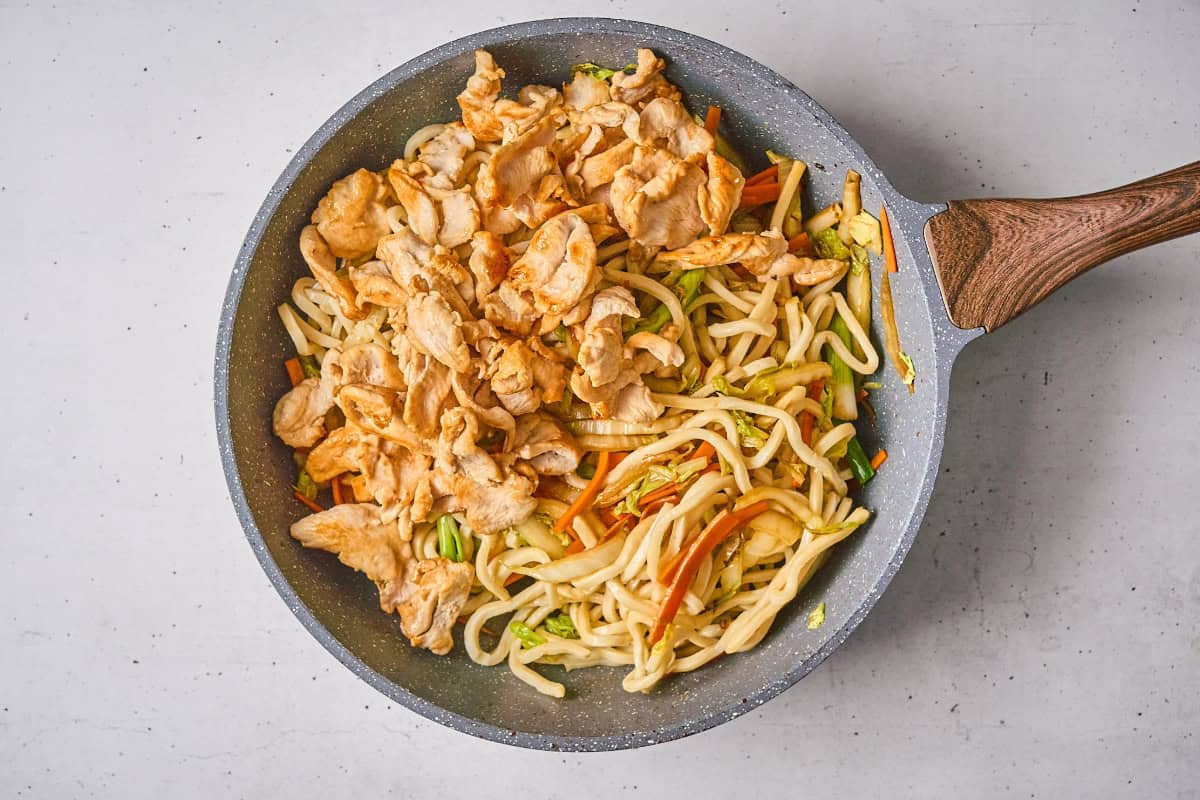
✱ My trick to avoid dry chicken
I cook my thin-sliced chicken pieces first so they get a nice sear and don’t overcook. When I add them back at the end, they get just enough pan contact to get evenly rewarmed and coated in that luxurious sauce without drying out. This ensures my chicken udon stir fry is always moist, juicy, and perfectly cooked!

Ginger Chicken Udon Stir Fry Recipe
Ingredients
For the Sauce:
- 3 tablespoons low-sodium soy sauce (*)
- 1 tablespoon rice vinegar
- 1 tablespoon honey
- 1 tablespoon Sichuan chili crisp (plus more for serving**)
- 2 cloves garlic (grated)
- 2 tablespoons grated ginger root
- 2-3 tablespoons water (to thin the sauce)
For the Stir Fry:
- 2 tablespoons neutral cooking oil (divided***)
- 1 pound boneless, skinless chicken thighs (thinly-sliced, or breasts)
- 3 cups shredded green or Napa cabbage
- 1 large carrot (julienned or thinly sliced)
- 3 scallions (white and green parts separated and sliced; plus more for topping)
- 1 pound cooked udon noodles (if vacuum-sealed, loosen according to package directions****)
- toasted sesame seeds (optional, for topping)
Instructions
- In a small bowl, whisk together the soy sauce, rice vinegar, honey, chili crisp, garlic, ginger, and water until smooth.3 tablespoons low-sodium soy sauce, 1 tablespoon rice vinegar, 1 tablespoon honey, 1 tablespoon Sichuan chili crisp, 2 cloves garlic, 2 tablespoons grated ginger root, 2-3 tablespoons water

- Heat 1 tablespoon of oil in a large skillet over medium-high heat. Add the chicken and cook for 4–6 minutes, stirring occasionally, until browned and cooked through. Transfer to a plate.2 tablespoons neutral cooking oil, 1 pound boneless, skinless chicken thighs
- In the same skillet, add the remaining 1 tablespoon of oil, followed by the cabbage and carrot. Cook for 2–3 minutes until wilted and lightly browned. Add the scallion whites and cook for another minute.3 cups shredded green or Napa cabbage, 1 large carrot, 3 scallions
- Add the noodles to the skillet and toss well.1 pound cooked udon noodles
- Return the chicken to the pan, add the scallion greens, and pour in the sauce. Toss everything together until the noodles are coated and heated through, 1–2 minutes.
- Serve with extra chili crisp, sesame seeds, or scallion greens if desired.toasted sesame seeds


Notes
- Use a microplane to grate garlic and ginger—it’s faster and easier than mincing with a knife.
- Slice the chicken evenly. Thin, uniform slices ensure quick, even cooking.
- Partially freeze the chicken for 20 minutes to make slicing easier.
- To julienne, stack the carrots and slice into thin planks, then cut into matchsticks by hand.
- Cabbage can be finely shredded with a knife if no food processor is available.
- Cook chicken first, then vegetables, then noodles. Returning the chicken to the pan at the end ensures it stays juicy and retains heat without overcooking.
- If your pan seems dry, add 1–2 tablespoons of water or extra soy sauce while tossing to evenly coat the noodles without making them watery.
- Serve alongside steamed dumplings, pickled vegetables, or a light cucumber salad for a full, balanced meal.
Note: Water, salt, pepper, oil, and broth are not counted as ingredients on this site.
Foolproof Tips
- Swap the veggies. Stir-fries are the perfect “clean out your fridge” meals — use what you have! Napa cabbage can be replaced with green cabbage, bok choy, shredded kale, or a bag of pre-shredded coleslaw. Carrots can easily be swapped with bell peppers or zucchini.
- Make a thicker sauce. If you prefer a slightly thicker stir-fry sauce, whisk in 1 teaspoon of cornstarch in step 1.
- Add more liquid for an even sauce coating. If your pan seems dry when mixing everything together at the end, add 1–2 tablespoons of water or extra soy sauce while tossing with the sauce. This will help to evenly coat the noodles, without making them watery.
How to Make Ginger Chicken Udon Noodles Step by Step
Prep: Gather the list of ingredients for this easy chicken udon recipe. Grate the garlic and ginger root (or use the equivalent amount of store-bought paste) and thinly slice the chicken. Shred the cabbage on a mandoline or with a sharp knife, and julienne the carrot by stacking and slicing into thin planks, then cutting into matchsticks with a sharp knife. Slice the scallions, separating the whites from the greens, and prepare the udon noodles according to the package. If vacuum-sealed, you’ll need to separate them in warm/hot water. If dried, you’ll need to boil them.

Make the Sauce: In a small bowl, whisk together 3 tablespoons of low-sodium soy sauce, 1 tablespoon of rice vinegar, 1 tablespoon of honey, 1 tablespoon of Sichuan chili crisp, 2 cloves of grated garlic, 2 tablespoons of grated ginger root, and 2-3 tablespoons of water until smooth. If you prefer a thicker sauce, whisk in 1 teaspoon of cornstarch. Set aside while you cook the chicken and veggies.

Cook the Chicken: Heat 1 tablespoon of neutral oil in a large skillet set over medium-high heat. Add 1 pound of thinly-sliced boneless, skinless chicken thighs (or breasts) and cook for 4-6 minutes, stirring occasionally, until browned and cooked through to 165°F. Transfer to a plate and set aside while you sauté the veggies.

Sauté the Veggies: In the same skillet (no need to wipe out), add the remaining 1 tablespoon of neutral oil, followed by 3 cups of shredded green or Napa cabbage and 1 large julienned carrot. Sauté for 2-3 minutes, or until wilted and lightly browned. Add the whites of 3 scallions and cook for another minute.

Toss the Noodles: Add 1 pound of cooked udon noodles, prepared according to the package, to the skillet and toss well.

Add the Chicken and Sauce: Return the cooked chicken to the pan, add the scallion greens, and pour in the sauce. Toss everything together until the noodles are coated and heated through, 1-2 minutes. If you added cornstarch to the sauce, you should notice it starting to visibly thicken.

Serve the Noodles: Serve your ginger chicken udon noodles hot from the skillet with extra chili crisp, toasted sesame seeds, or scallion greens if desired.

How to Store, Freeze, and Reheat
Store leftover ginger chicken udon noodles in an airtight container in the refrigerator for up to 3 days. Reheat on the stovetop over medium-low heat, splashing in a little water or soy sauce to re-moisten the noodles as needed.
I do not recommend freezing this dish, as the noodles tend to turn mushy once thawed. You can, however, freeze the chicken and veggies for up to 3 months. Let thaw overnight in the refrigerator before reheating and tossing with fresh noodles or rice.
More Stir-fry Chicken Recipes to Try!


Note: This recipe is one of those few exceptions on our site that has more than 10 ingredients. We try to keep things VERY easy around here, and limiting ingredients and time spent is one of our favorite ways. That being said, this recipe is too delicious to leave out of our recipe box! It’s an exception that is so flavorful and worth the extra ingredients if you have the time and resources to make it.
















Leave a Reply