





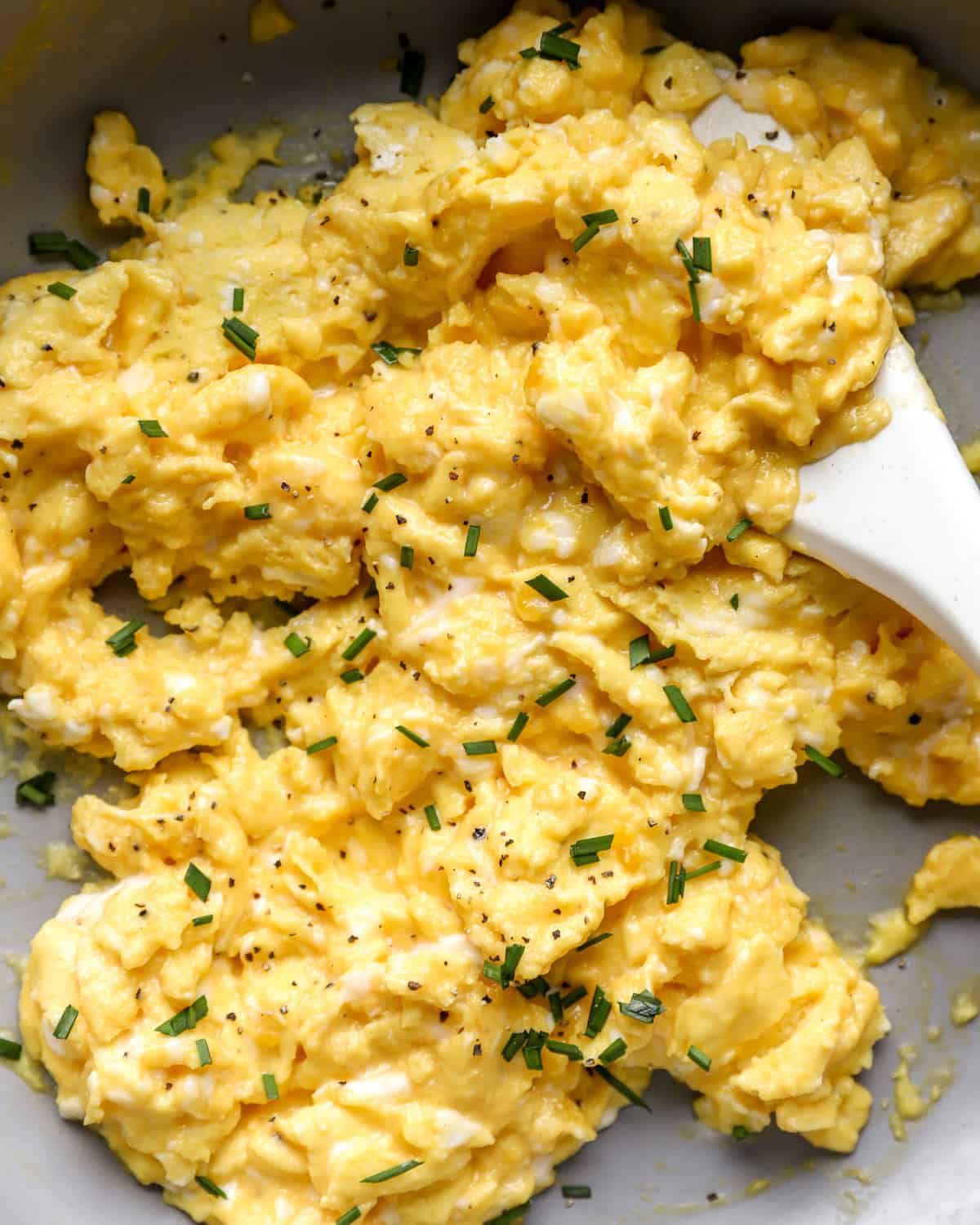
Learning how to make scrambled eggs is a fundamental breakfast skill, and I’ve perfected my recipe over the years to create scrumptious, fluffy eggs. I’ll show you my foolproof method so you can get a perfect scramble every time!
Fluffy Scrambled Eggs
The most important piece of advice I got while learning how to make scrambled eggs was to be patient! Low and slow is the key to soft and fluffy scrambled eggs. If the heat is too high, they’ll burn. And if you don’t stir them enough, they’ll turn rubbery. It’s quite a balance, but one that’s easy to master with just a little practice!

Email this recipe
Enter your email and we’ll send the recipe directly to you!
By submitting this form, you consent to receive emails from Easy Chicken Recipes.
Hard vs. Soft Scrambled Eggs
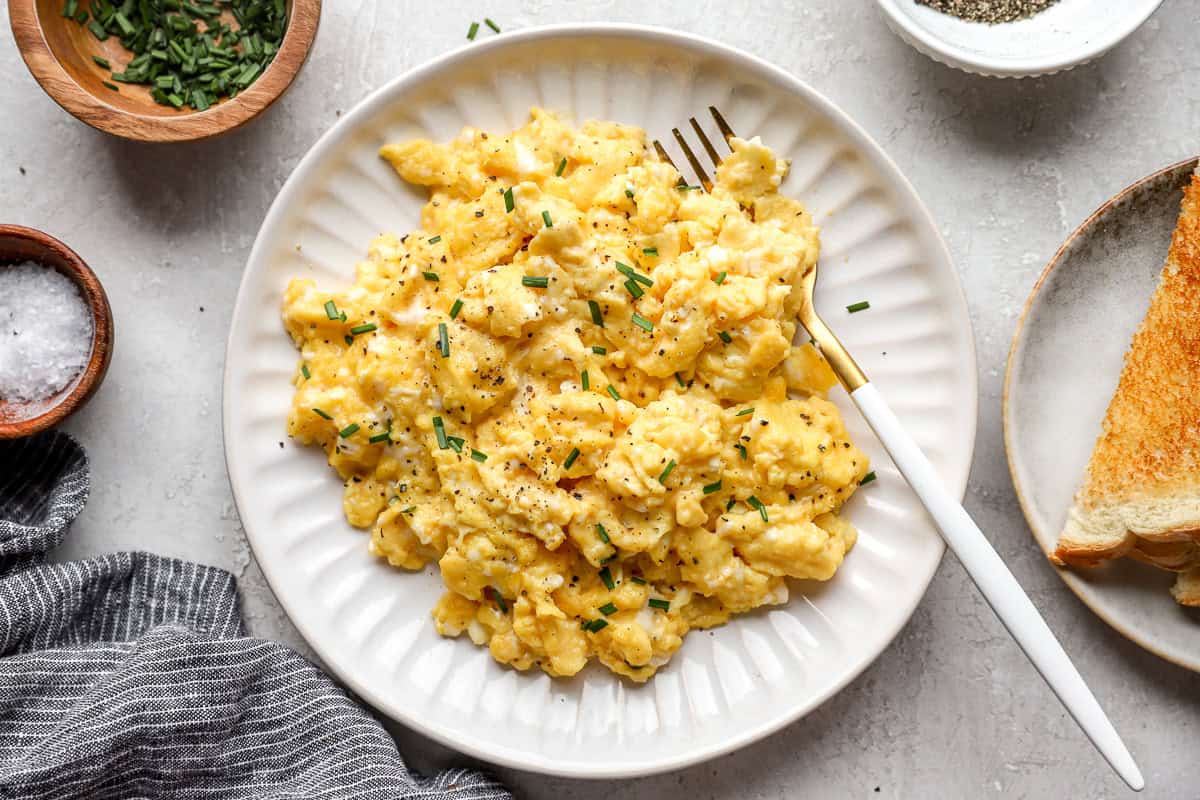
The classic French method (and the one I recommend) is to scramble your eggs softly over low heat. You’ll want to stir gently, as this will help keep the curds larger and fluffier. Your eggs will be nice and moist this way.
Hard-scrambled eggs, on the other hand, are cooked over higher heat and stirred more often, leading to a drier texture with smaller curds. These are the kind of eggs you’ll more often see at a diner.

How to Make Scrambled Eggs
Ingredients
- 10 large eggs (*)
- ½ cup milk (**)
- ½ teaspoon kosher salt
- ⅛ teaspoon ground black pepper
- 2-3 tablespoons unsalted butter
- chopped chives (optional, for garnish)
Instructions
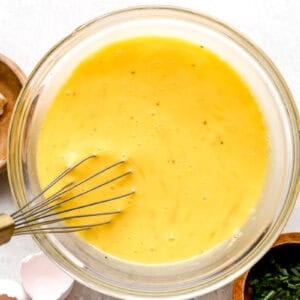
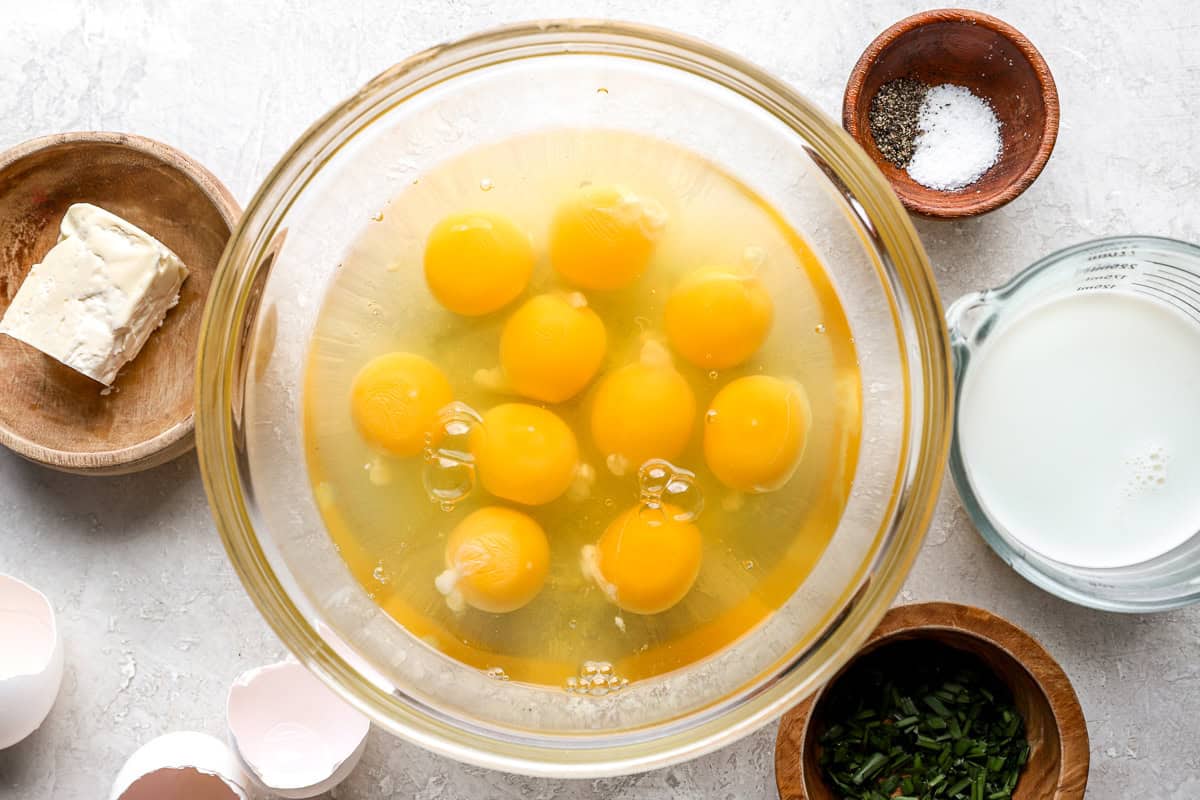
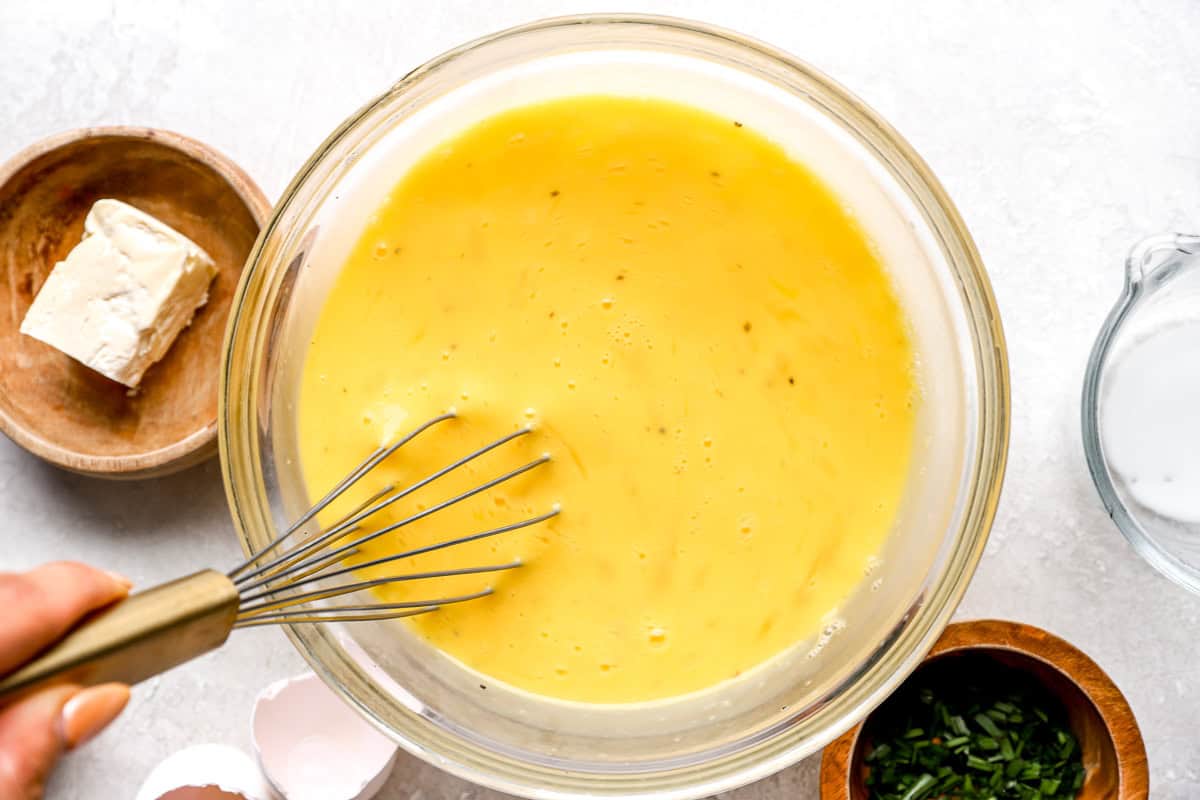
- In a large bowl, whisk together the eggs, milk, salt, and pepper. Set aside.10 large eggs, ½ cup milk, ½ teaspoon kosher salt, ⅛ teaspoon ground black pepper

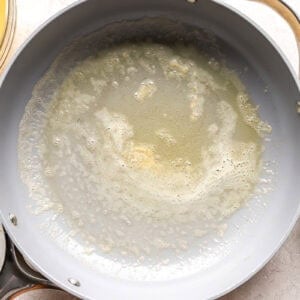
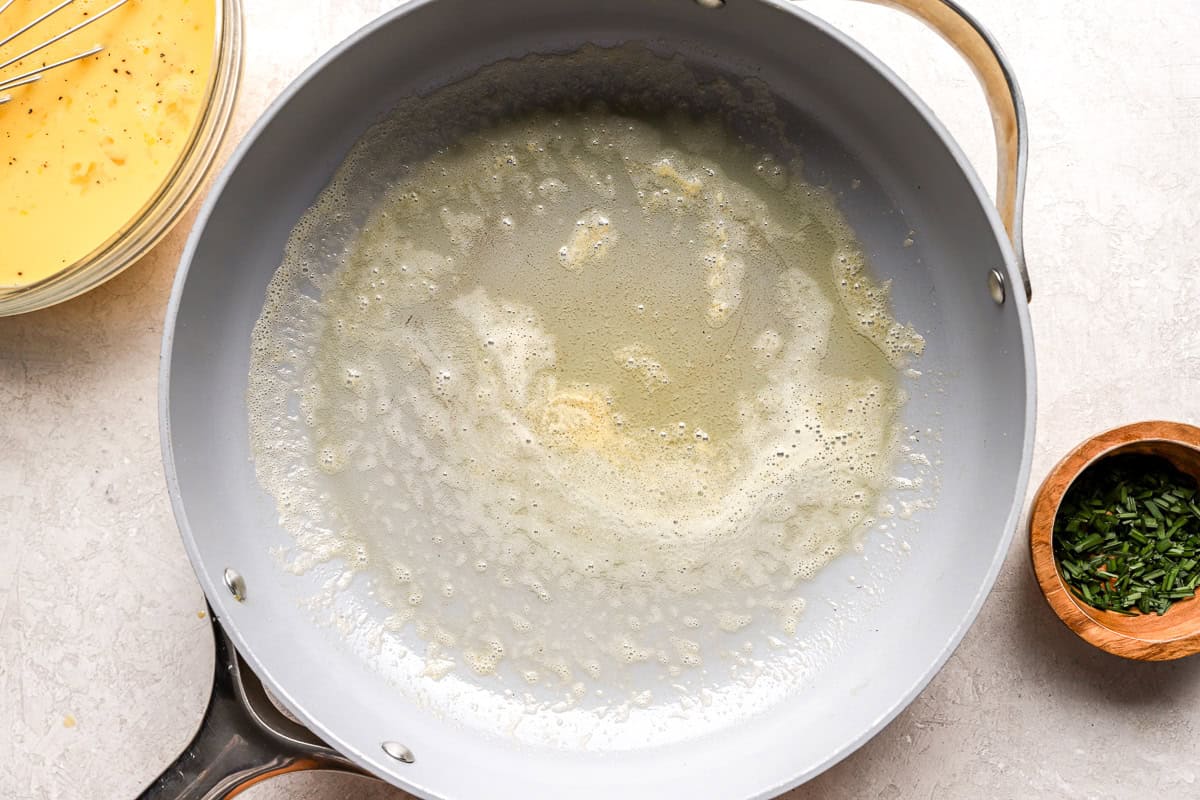
- Melt the butter in a large skillet over medium low heat. Once melted, swirl it around to cover the bottom of the pan.2-3 tablespoons unsalted butter
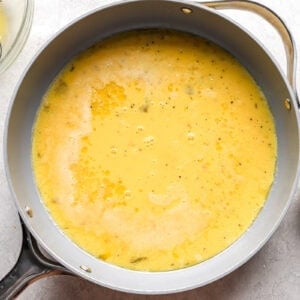
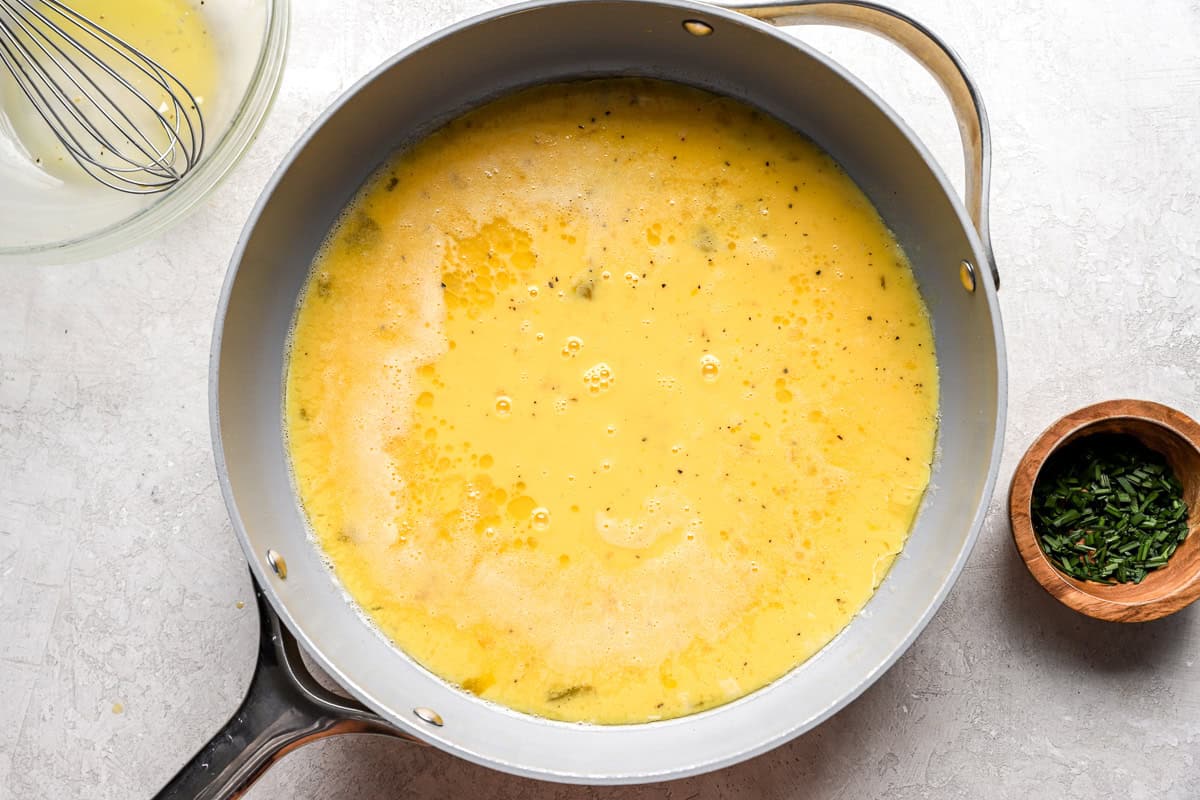
- Pour in the egg mixture, and let it sit for a minute.
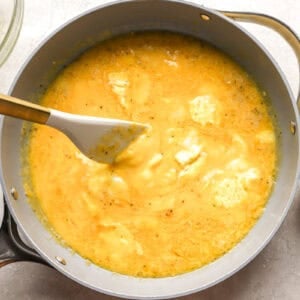
- Using a spatula gently pull the eggs away from the side of the pan and push them through the middle towards the opposite side.
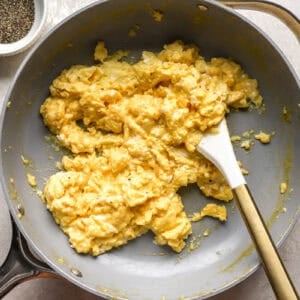
- Continue this pattern, until the eggs are soft and slightly runny, or until the eggs are cooked to your liking.
- Take the eggs off the heat to let them to continue to cook/set.
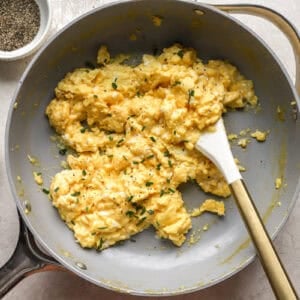
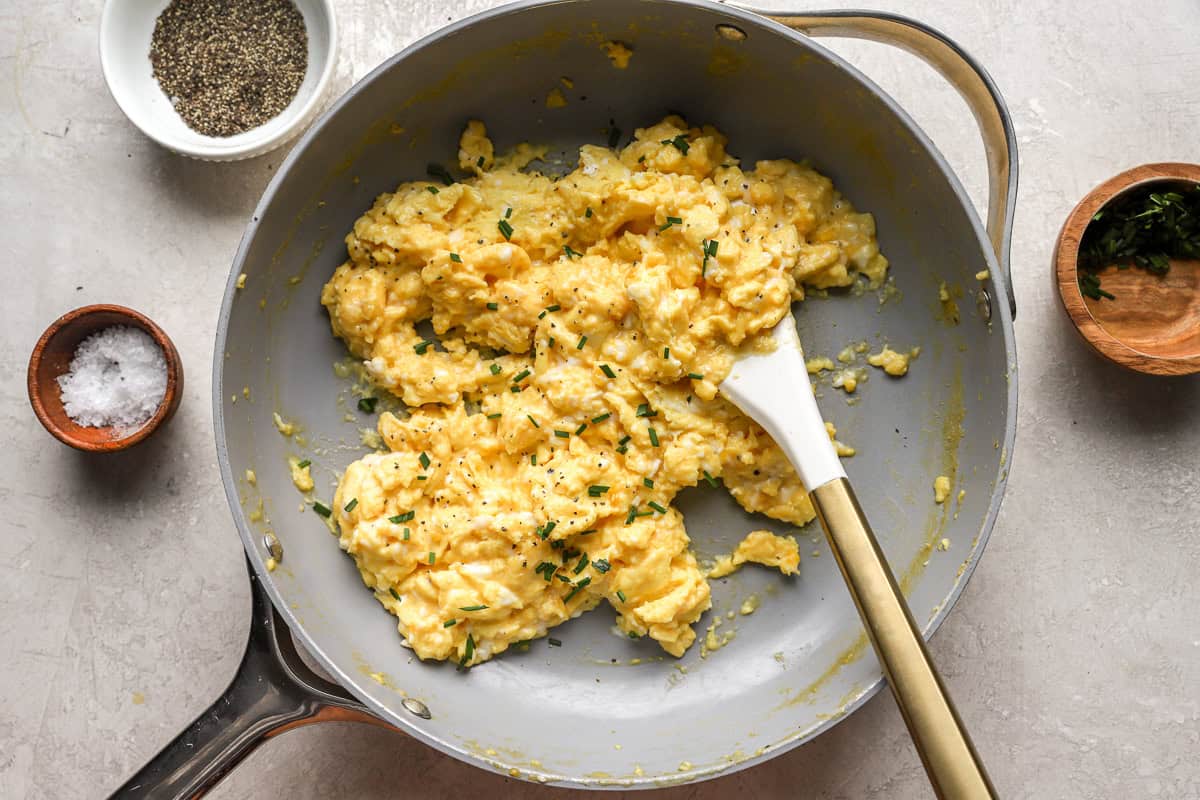
- Top with chives, and additional salt and pepper to taste.chopped chives
Notes
- To test your eggs for freshness, gently drop one in a glass of water. If it sinks, it is fresh. If it floats, it has gone bad!
- Take care not to overheat the pan or the eggs could burn before they are fully set.
- A silicone or heat-proof spatula is the ideal tool for scrambling eggs. A wooden spoon will work in a pinch, but it’s just not as good at getting into the seam where the sides of the pan meet the bottom. Don’t use a metal spatula, which could scrape and scratch the nonstick coating.
- I recommend enjoying scrambled eggs as soon as they are made.
Note: Water, salt, pepper, oil, and broth are not counted as ingredients on this site.
How to Make Scrambled Eggs Step by Step
Prep: Gather the quick list of ingredients. Crack 10 eggs into a large mixing bowl.
Whisk the Eggs: Whisk the eggs with ½ cup of milk, ½ teaspoon of kosher salt, and ⅛ teaspoon of ground black pepper. Set aside.
Melt the Butter: Melt 2-3 tablespoons of unsalted butter in a large skillet over medium-low heat. Once melted, swirl it around to fully cover the bottom of the pan.
Pour the Eggs: Pour in the egg mixture, and let it sit for a minute.
Scrape the Eggs: Using a spatula, gently pull the eggs away from the side of the pan and push them through the middle towards the opposite side.
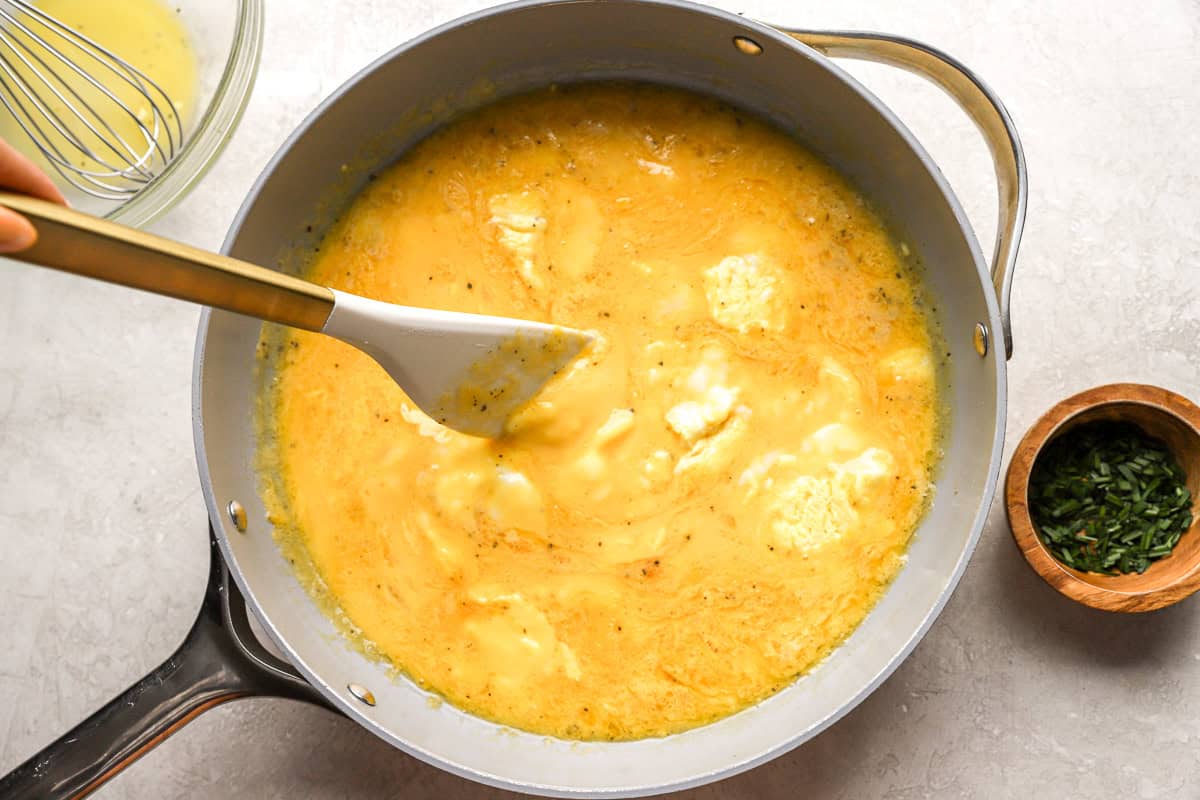
Cook the Eggs: Continue this pattern, until the eggs are soft and slightly runny, or until the eggs are cooked to your liking.
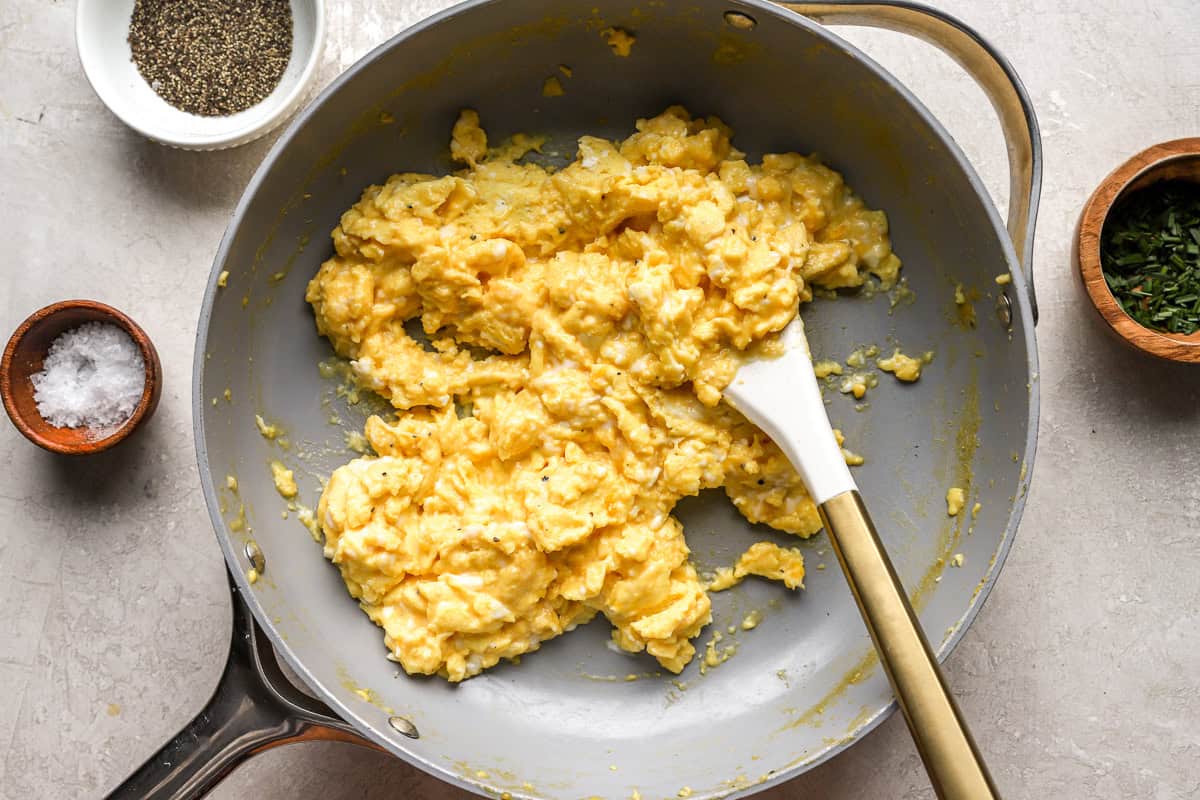
Serve the Eggs: Take the eggs off the heat to let them to continue to cook/set. Top with chives, and additional salt and pepper to taste.
How to Store and Reheat
I recommend serving scrambled eggs hot and fresh because leftovers don’t hold up as well in the fridge. That being said, you can store them for up to 24 hours in an airtight container in the refrigerator, and reheat them back in the pan over low heat.














Leave a Reply