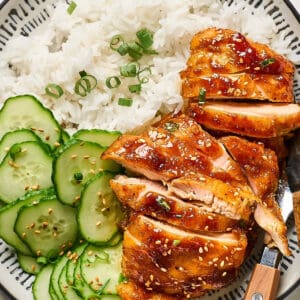
Shoyu Chicken Recipe
My one pan shoyu chicken features crispy, juicy thighs glazed in a sweet and sticky Hawaiian-inspired sauce!
Servings: 6 servings
Calories: 325kcal
Equipment
- Cast Iron Skillet or another non-stick skillet
Ingredients
- 6 boneless, skinless chicken thighs 1½ - 2 pounds*
- ¼ cup cornstarch **
- 1 teaspoon kosher salt
- ½ teaspoon ground black pepper
- 3 tablespoons cooking oil ***
For the Shoyu Sauce:
- 3 tablespoons unsalted butter
- 1 tablespoon garlic paste or 4 grated garlic cloves****
- 1 tablespoon ginger paste or grated 2-inch piece fresh ginger****
- ⅓ cup low sodium soy sauce
- ⅓ cup brown sugar
Optional, for Serving:
- steamed white rice
- sliced green onions
- sesame seeds
Instructions
- Pat the chicken thighs dry with paper towels, then season lightly with the salt and black pepper.6 boneless, skinless chicken thighs, 1 teaspoon kosher salt, ½ teaspoon ground black pepper
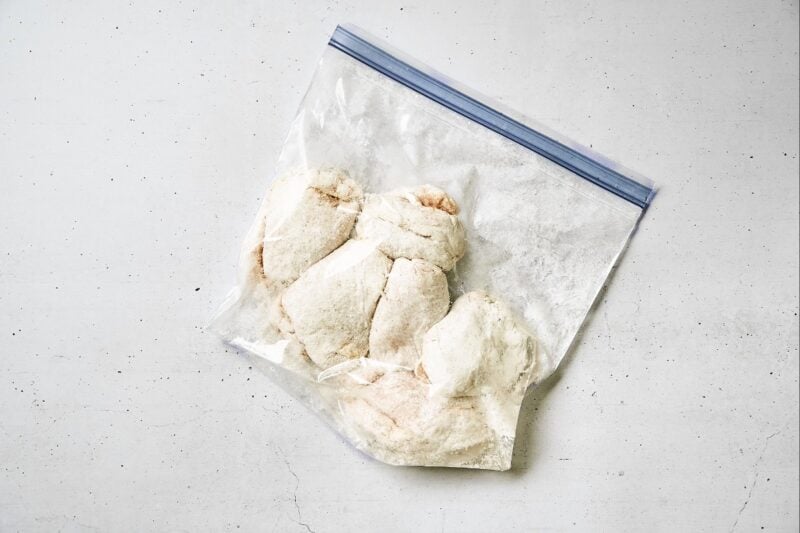
- Place the chicken thighs and cornstarch in a large resealable bag. Seal and shake until the chicken is evenly coated on all sides. Shake off any excess cornstarch before cooking.¼ cup cornstarch
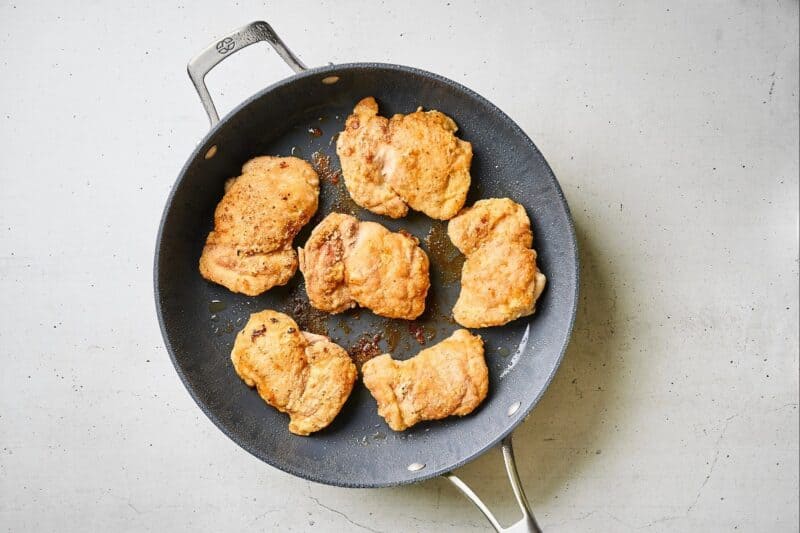
- Heat a large skillet over medium until hot. Add the oil and swirl to coat the pan.3 tablespoons cooking oil
- Working in batches if needed, add the chicken thighs presentation-side down in a single layer. Cook for 8–10 minutes per side, adjusting the heat as needed, until golden brown and cooked through. Transfer the chicken to a plate.
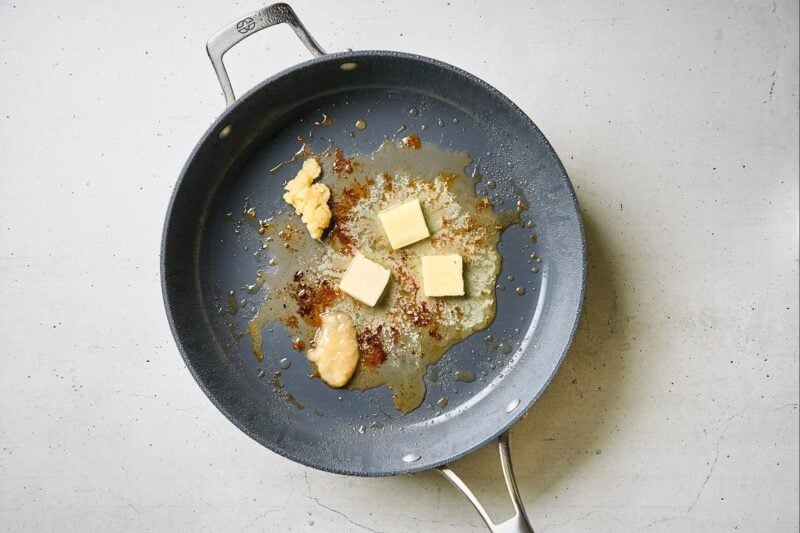
- In the same skillet, add the butter, garlic, and ginger and cook for 1–2 minutes, stirring often, until fragrant.3 tablespoons unsalted butter, 1 tablespoon garlic paste, 1 tablespoon ginger paste
- Add the soy sauce and brown sugar. Stir until the sugar dissolves and the sauce begins to bubble gently.⅓ cup low sodium soy sauce, ⅓ cup brown sugar
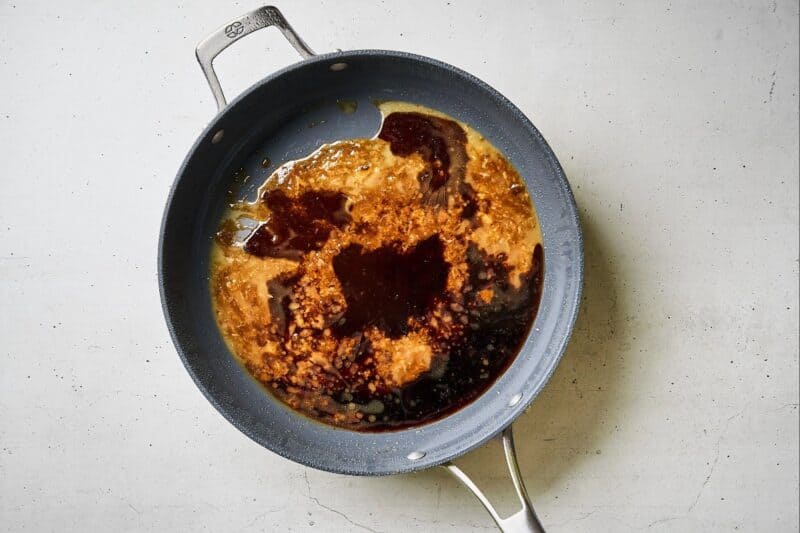
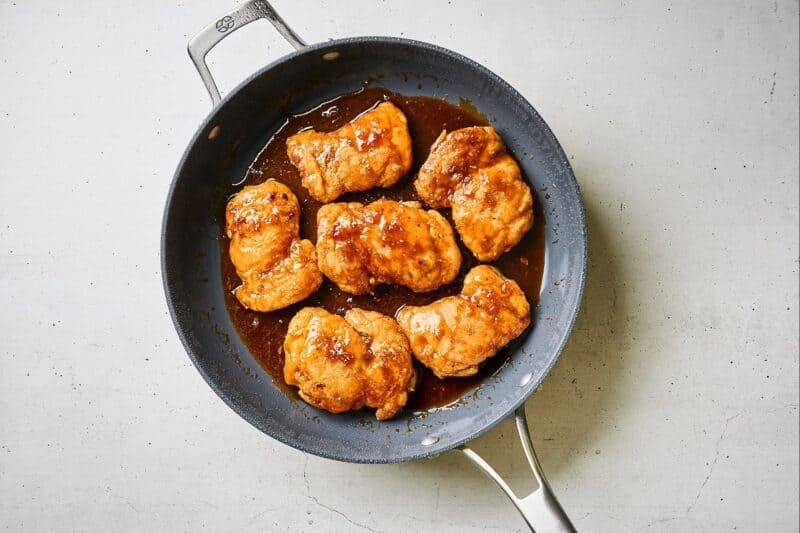
- Return the chicken thighs to the skillet and turn them several times in the sauce until fully coated and glossy, about 2–3 minutes.
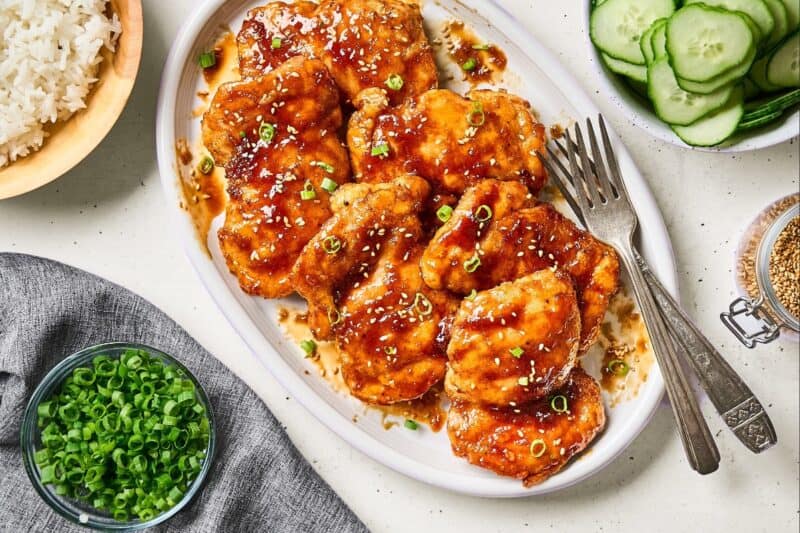
- Garnish with green onions and sesame seeds if desired. Serve with rice.sliced green onions, sesame seeds, steamed white rice
Notes
*Boneless chicken thighs work best for this recipe because they can stay juicy with a longer cook time. You can use chicken breast, but reduce the cooking time and watch the heat carefully, as they are more prone to drying out.
**Cornstarch creates the ideal lightly-crisp coating. Potato starch works similarly. You can use flour if that's all you have, but the crust will be a little heavier.
***Use a neutral cooking oil, like avocado, canola, vegetable, or grapeseed oil.
****I like using pastes for convenience, but fresh garlic and ginger will add fresher flavor.
Becky's Top Tips:
- Thoroughly dry the surface of the chicken using paper towels. This is essential for proper browning!
- Use a large pan to give the thighs plenty of space to cook and brown. If it's too crowded, it will create a steaming effect. Cook in batches if needed.
- For a recipe like this, I recommend pre-heating the pan for a couple of minutes, then adding oil and giving it ample time to warm up. Both of these steps will really help prevent the chicken from sticking or burning.
Nutrition
Calories: 325kcal | Carbohydrates: 19g | Protein: 23g | Fat: 17g | Saturated Fat: 6g | Polyunsaturated Fat: 5g | Monounsaturated Fat: 5g | Trans Fat: 0.3g | Cholesterol: 122mg | Sodium: 617mg | Potassium: 357mg | Fiber: 0.2g | Sugar: 12g | Vitamin A: 203IU | Vitamin C: 1mg | Calcium: 32mg | Iron: 1mg