Mouth-watering Chicken Recipe
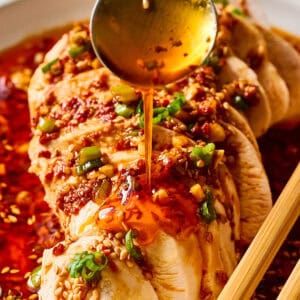
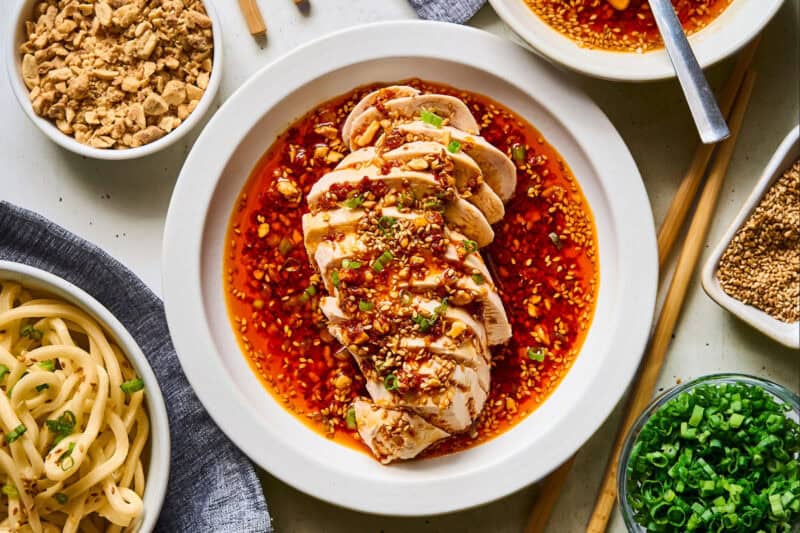
This mouthwatering chicken recipe is inspired by classic Kou Shui Ji. Juicy poached chicken breasts are topped with a spicy Sichuan chili oil sauce. Perfect for serving with rice, noodles, or as leftovers in wraps and salads.
Servings: 4 people
Calories: 377kcal
Ingredients
For the Chicken:
- 4 cups water or enough to cover chicken
- 1 (1-inch piece) fresh ginger sliced*
- 5 scallions thinly sliced, white and green parts separated, divided
- 1 teaspoon table salt
- 2 boneless, skinless chicken breasts **
For the Sauce:
- 3 tablespoons crushed roasted peanuts ***
- 2 tablespoons gochugaru Korean chili flakes****
- 1 teaspoon ground paprika
- 1 tablespoon toasted sesame seeds plus more for garnish
- 1 teaspoon granulated sugar
- 1 teaspoon table salt
- ⅓ cup vegetable oil
- 1 teaspoon grated fresh ginger
- 1 teaspoon Sichuan peppercorns *****
- 3 tablespoons water
- 1 teaspoon black vinegar ******
Instructions
Poach the Chicken:
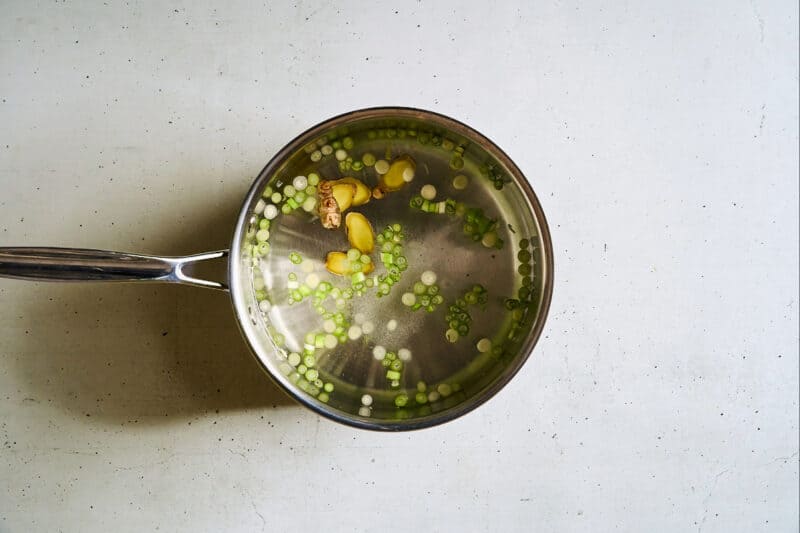
- Bring the water, sliced ginger, half of the scallion whites, and 1 teaspoon salt to a boil in a medium pot.4 cups water, 1 (1-inch piece) fresh ginger, 5 scallions, 1 teaspoon table salt
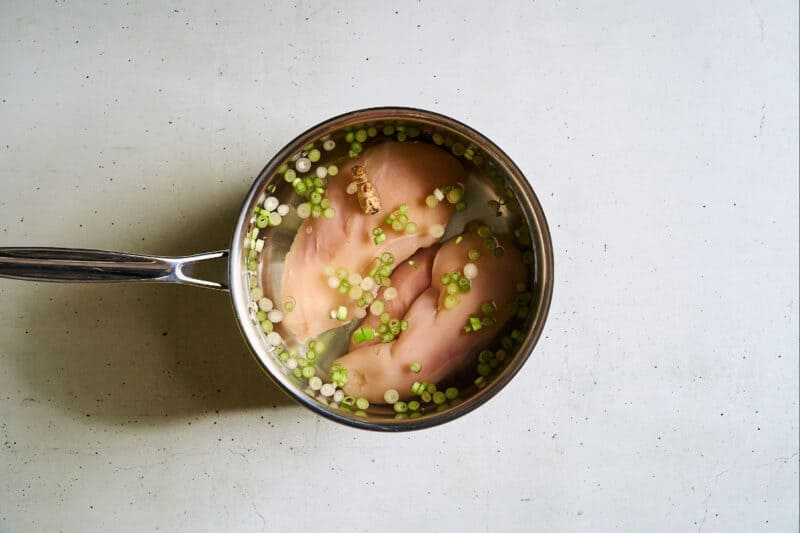
- Add the chicken, let it boil for 1 minute, then reduce the heat to low, cover, and simmer for 20 minutes.2 boneless, skinless chicken breasts
Make the Sauce:
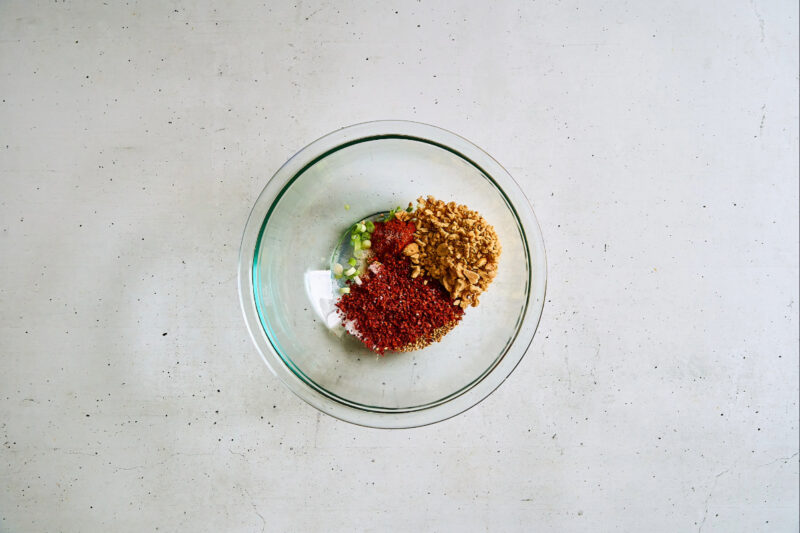
- While the chicken cooks, prepare the sauce. Combine the peanuts, gochugaru, paprika, sesame seeds, sugar, 1 teaspoon salt, and the rest of the scallion whites in a heat-proof bowl.3 tablespoons crushed roasted peanuts, 2 tablespoons gochugaru, 1 teaspoon ground paprika, 1 tablespoon toasted sesame seeds, 1 teaspoon granulated sugar, 1 teaspoon table salt
- Heat the vegetable oil in a small pan over medium heat until hot but not smoking. Add the grated ginger and Sichuan peppercorns and cook for 1-2 minutes, until fragrant.⅓ cup vegetable oil, 1 teaspoon grated fresh ginger, 1 teaspoon Sichuan peppercorns
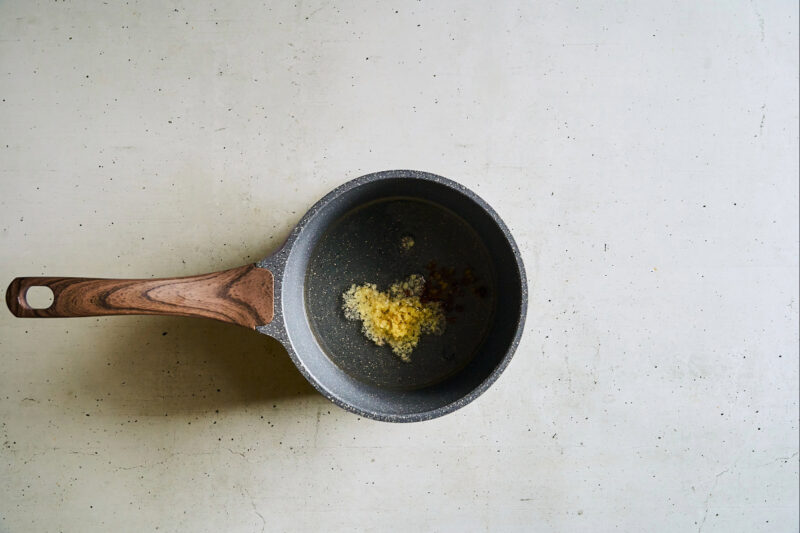
- Strain out the solids, then pour the hot oil over the ingredients in the bowl.
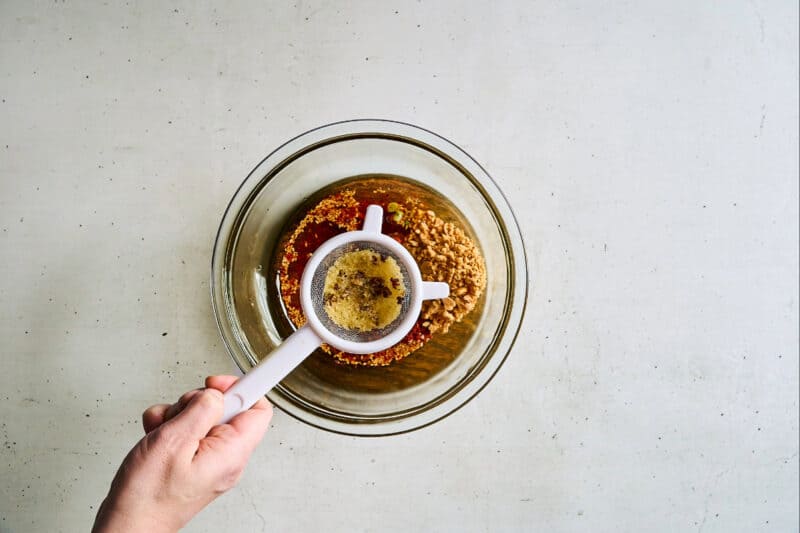
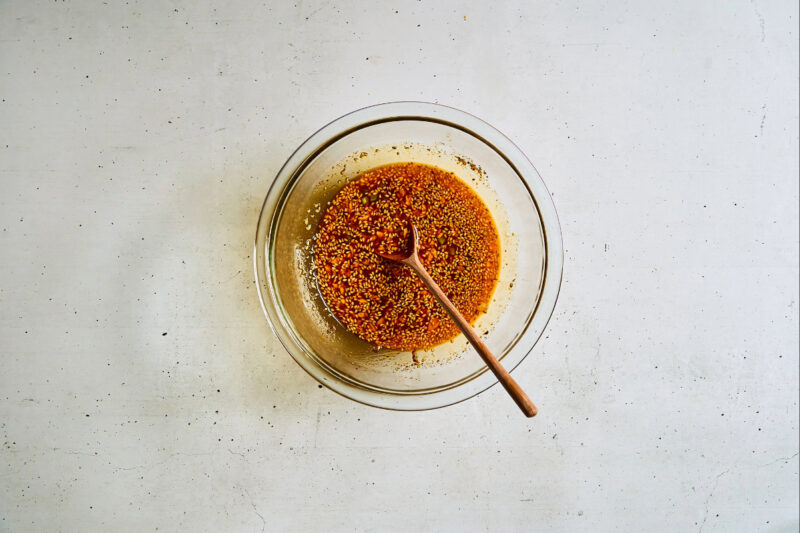
- Stir in the 3 tablespoons water and the black vinegar until evenly mixed. Set aside.3 tablespoons water, 1 teaspoon black vinegar
Finish and Serve:
- Prepare an ice bath by filling a bowl ⅔ with cool water, and adding enough ice to bring the water line to ¾. When the chicken reaches 165°F, transfer it to the ice bath to cool completely, about 15-20 minutes.
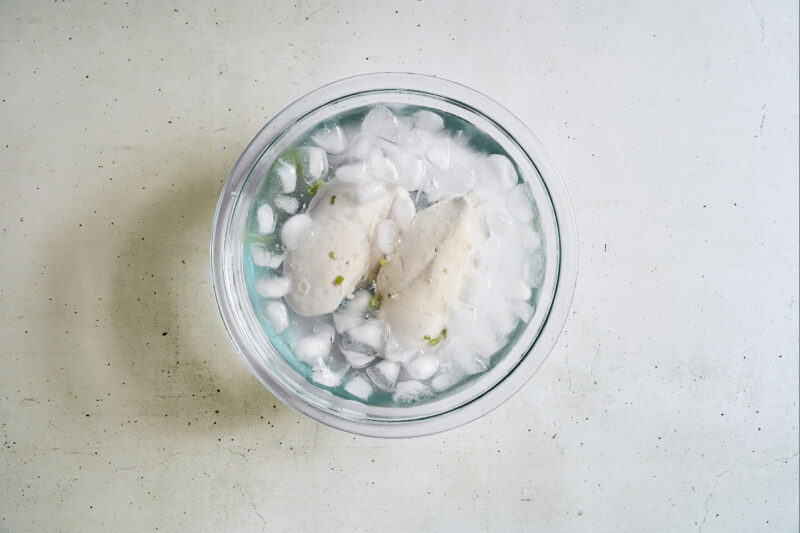
- Slice into bite-sized pieces and arrange on a serving plate.
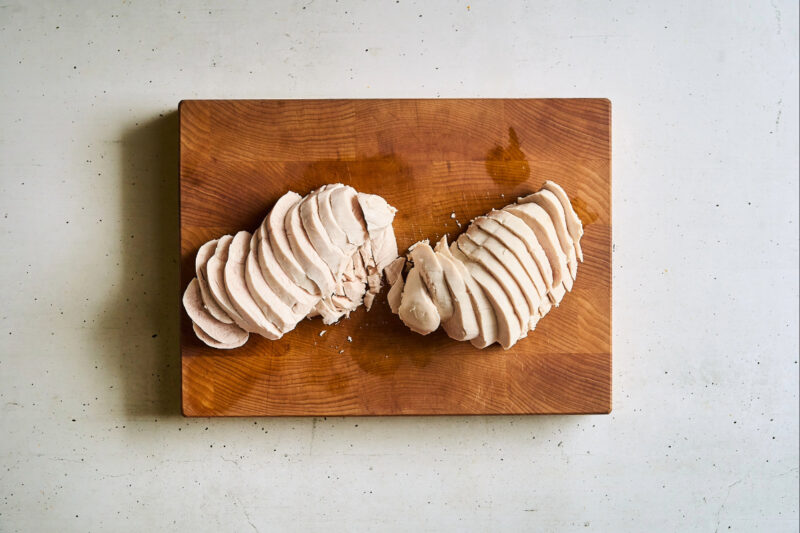
- Spoon the chili oil sauce over the chicken and garnish with the reserved scallion greens and extra sesame seeds. Serve at room temperature or slightly chilled.
Notes
*If you’re out, use ½ teaspoon of ground ginger--but the flavor won't be as bright.
**Thighs work too but require an extra 5-7 minutes of poaching.
***Toasted cashews or sunflower seeds can be used for a softer, butterier finish.
****Replace with Aleppo pepper or a mild chili powder mixture if needed.
*****Rice vinegar or sherry vinegar can replace it, but adjust to ¾ teaspoon to avoid over-acidity.
******If unavailable, use a pinch of freshly cracked black pepper mixed with ground coriander for mild complexity.
Becky's Top Tips:
- A pot with tall sides maintains a consistent simmer for even poaching; if using a wide shallow pan, add a bit more water to ensure the chicken stays submerged.
- Adding ginger and scallion whites at the start infuses the liquid as it heats, creating a subtle broth that seasons the chicken throughout.
- Pouring hot oil over the chili mixture intensifies color, aroma, and flavor; it essentially “opens up” the spices for maximum impact.
- If you prefer a milder sauce, let the oil cool for 30 seconds before pouring; hotter oil produces a deeper, stronger heat.
- Adding water and vinegar at the end cools the mixture and loosens the texture so it coats the chicken instead of clumping.
- If you don’t have a thermometer, check the chicken for doneness by slicing into the thickest part to confirm no pink remains.
- Rapidly cooling the chicken in an ice bath keeps it juicy and prevents overcooking; if you’re out of ice, transfer it to a chilled plate and refrigerate uncovered for 10-15 minutes.
- If you struggle to get clean slices, refrigerate the chicken for 20 minutes after cooling; firmer meat slices more evenly.
- This dish shines when served at room temperature or slightly chilled because the sauce coats each piece cleanly without melting.
- Use leftover chicken in cold noodle bowls, lettuce cups, rice bowls, or tucked into a wrap with crisp vegetables and herbs.
Nutrition
Serving: 0.5chicken breast | Calories: 377kcal | Carbohydrates: 7g | Protein: 29g | Fat: 27g | Saturated Fat: 4g | Polyunsaturated Fat: 13g | Monounsaturated Fat: 7g | Trans Fat: 0.1g | Cholesterol: 76mg | Sodium: 1413mg | Potassium: 645mg | Fiber: 3g | Sugar: 2g | Vitamin A: 1617IU | Vitamin C: 5mg | Calcium: 70mg | Iron: 2mg